Swiss Bank Accounts for Americans

Americans can legally open Swiss bank accounts, but FATCA restrictions, higher minimum deposits, and ongoing tax compliance make Swiss banking more expensive and more complicated than domestic alternatives. Many Swiss banks stopped accepting American account holders entirely after 2014 because the compliance cost exceeded the revenue from smaller accounts.
Swiss banking still delivers value for Americans with enough assets to justify the cost: multi-currency accounts, institutional-grade investment management, and the Swiss franc as a currency position. Most Swiss private banks accepting Americans require minimum deposits of $1 million. Combined annual costs for banking fees and U.S. tax preparation run $6,000 to $13,000.
Find Out Whether You Need
a Cook Islands Trust
Jon and Gideon Alper set up offshore trusts for clients nationwide. Consultations are free and confidential, by phone or Zoom, and usually available within one business day. You’ll speak directly with Jon or Gideon.
Request a Free Consultation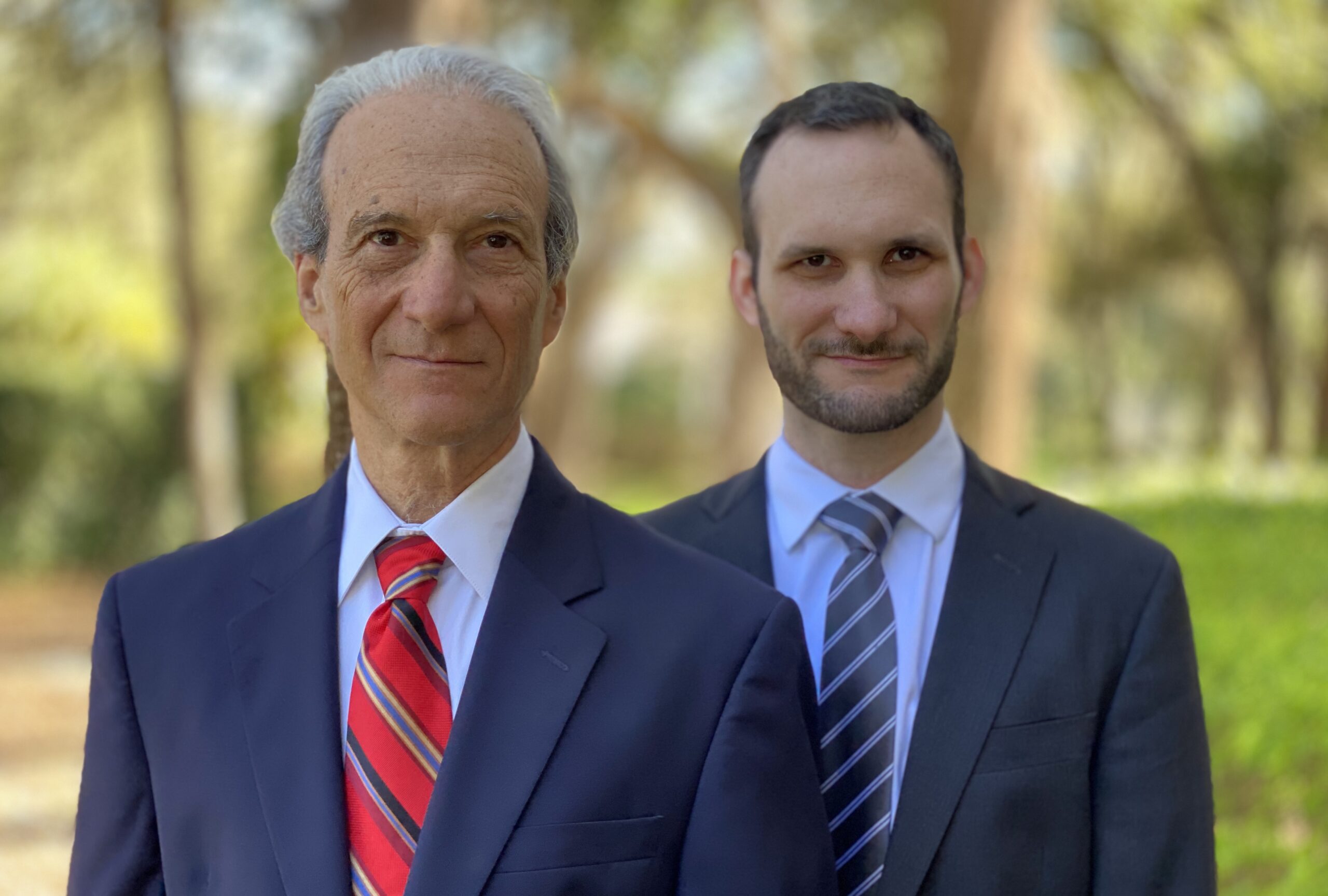
Can Americans Still Open Swiss Bank Accounts?
Americans can open and maintain Swiss bank accounts. No U.S. or Swiss law prohibits it. The practical barrier is that many Swiss banks, particularly smaller cantonal and regional banks, no longer accept U.S. persons because FATCA compliance requires dedicated staff, reporting systems, and ongoing monitoring that cost more than the accounts generate in fees.
The banks still taking American applicants are mostly large institutions that already run FATCA reporting at scale. UBS, now Switzerland’s largest bank after absorbing Credit Suisse in 2023, maintains compliance systems for U.S. account holders. Several mid-sized private banks in Geneva, Zurich, and Lugano continue to accept Americans, though minimum deposit thresholds are higher for U.S. persons than for other nationalities.
Opening the account takes about three weeks on average, and longer at some Swiss private banks. An application requires a certified passport, proof of address, source-of-funds documentation, a signed IRS Form W-9, and professional references. Banks conduct enhanced KYC due diligence on every American applicant. Accounts opened through an offshore trust or LLC require additional entity-level documentation, including trust deeds, certificates of good standing, and authority documents confirming who may direct the account.
How Swiss Banking Secrecy Ended for Americans
Under Switzerland’s 1934 Federal Banking Act, a bank employee who revealed depositor information to a foreign government committed a crime. For decades, this secrecy attracted Americans who wanted to hold assets beyond the reach of the IRS.
That ended in stages. In 2009, UBS paid $780 million under a deferred prosecution agreement. A separate settlement later that year required UBS to hand over information on approximately 4,450 accounts held by U.S. persons, which reached the IRS through the Swiss government. It was the first time a major Swiss bank had broken secrecy under U.S. enforcement pressure. Eighty additional Swiss banks later entered the DOJ’s Swiss Bank Program, paying collective penalties of more than $1.36 billion and disclosing account holder data.
FATCA, enacted in 2010 and implemented through a bilateral agreement with Switzerland in 2014, formalized the reporting structure. Swiss banks must now report account balances, interest income, dividends, and other financial information for U.S. account holders directly to the IRS. Banks that refuse face a 30% withholding tax on U.S.-source income, a penalty severe enough that nearly every Swiss bank chose compliance.
In 2018, Switzerland signed on to the Common Reporting Standard, which moves account data automatically among more than 100 countries. A further agreement between the United States and Switzerland will reroute the FATCA reports through the Swiss Federal Tax Administration, which will then forward them to the IRS. That agreement is signed but not yet in force.
How Much Does a Swiss Bank Account Cost?
A Swiss bank account costs an American $6,000 to $13,000 per year, combining banking fees and U.S. tax preparation. The private banks that accept U.S. persons also require a practical minimum deposit of $1 million. The CPA’s share for the FBAR, Form 8938, and any trust-related returns runs $2,000 to $3,000 and applies to any offshore account regardless of jurisdiction. Banking fees alone run $4,000 to $10,000 a year on a $1 million balance, with custody charges and currency-conversion spreads, not the headline maintenance fee, driving most of the total.
What Are the Tax Reporting Requirements?
A Swiss bank account carries the same U.S. reporting duties as any other foreign account. The FBAR is due once aggregate foreign balances exceed $10,000 during the year. Form 8938 follows at higher asset thresholds. When a trust or LLC holds the account, that adds Form 3520, Form 3520-A, or Form 8858.
A Swiss account produces no tax advantage for an American. All income earned in it (interest, dividends, capital gains) is taxable in the United States in the year earned, regardless of whether it is withdrawn.
Foreign mutual funds and foreign ETFs held in the account count as passive foreign investment companies. A U.S. person who owns shares in one files Form 8621 for that holding every year. Gains on those funds lose the long-term capital gains rate and are taxed at the top ordinary rate plus an interest charge, unless the shareholder makes an election that changes the treatment.
A willful failure to file an FBAR draws a civil penalty of up to $165,353 or half the account balance, whichever is greater, per account per year, and criminal prosecution remains available. A non-willful violation draws up to $16,536 per unfiled report. The IRS also receives account information directly from the Swiss bank under FATCA, independent of what the account holder reports. The IRS can find an unreported account by comparing the bank-reported data against the account holder’s tax filings.
What Does Swiss Banking Offer That Domestic Accounts Cannot?
Swiss banks provide multi-currency accounts that simultaneously hold U.S. dollars, Swiss francs, euros, and British pounds, a capability most domestic banks and brokerages lack. The Swiss franc has appreciated against the dollar over the past two decades. Holding liquid assets in francs provides currency diversification without repeated foreign exchange transactions.
Swiss private banks also provide direct access to European, Asian, and emerging-market investments through institutional-grade trading platforms. Portfolio management, structured products, and fixed-income strategies denominated in multiple currencies are standard services. A dedicated relationship manager handles administration and investment execution as well as compliance documentation.
For Americans with a Cook Islands trust, a Swiss bank as custodian pairs institutional stability with the trust’s legal protection. The trustee manages the banking relationship, and the settlor benefits from Swiss investment platforms without the administrative burden of direct account management.
Is Swiss Banking Worth the Cost Compared to Other Jurisdictions?
Swiss banking is worth its higher cost to an account holder who uses the investment platform and holds balances in several currencies. Caribbean banks in the Cayman Islands, Nevis, and Belize accept Americans more readily. Their minimum deposits and maintenance fees are lower. Banks in Luxembourg and Liechtenstein offer intermediate pricing with access to European markets.
The legal protection in offshore asset protection comes from the trust structure, not from the banking jurisdiction. Swiss courts enforce U.S. civil judgments through their own recognition proceedings, so an account held in the owner’s personal name gains no protection from sitting in Switzerland. A Cook Islands trust holding assets at a Caribbean bank has the same legal protection as one holding assets at UBS. Switzerland adds banking quality, currency diversification, and investment access.
Swiss banking makes sense when the account holder wants the Swiss franc as a long-term currency position or needs institutional-grade private banking with multi-currency investment management. It also fits people with specific investment needs, like European fixed income, structured products, or precious metals custody, that Swiss banks serve better than Caribbean alternatives. Anyone whose primary need is secure custody without Swiss-specific investment features can get equivalent legal protection from a well-regulated bank elsewhere at lower cost.
Alper Law has structured offshore and domestic asset protection plans since 1991. Schedule a consultation or call (407) 444-0404.