

Cook Islands Trust Attorneys
Find out if a Cook Islands trust can protect your assets.
A Cook Islands trust is one of the best ways to protect your assets from creditors. Get advice from attorney Jon Alper or Gideon Alper about your specific situation. Consultations are available by phone or Zoom. Our firm has specialized in asset protection planning since 1991.
“In half an hour, I received more value and useful knowledge than in all of the time spent with the other law firms combined.”
“I had a half hour consultation and Gideon is brilliant one of the most knowledgeable attorneys I’ve ever spoken to in my 72 years.”
“Gideon was very easy to work with, and his answers were in English, not lawyerese.”
“During the convenient zoom, I found Jonathan to be super smart, very fluent with law, case law, precedent and pragmatic strategy and tactics.”
“Spoke to Gideon Alper. Highly recommend! This man was knowledgeable without an ego.”
“A professional who in just a few minutes develops a deep knowledge of your problem and a quick simple inexpensive solution.”
“I can tell you these two are the real deal. They know what they are talking about and tell it like it is.”
“I have worked with many attorneys and I have to be honest, Jonathan is the best I have worked with.”
What Happens Next
- Consultation. We will review what you own, who your creditors are or could be, and whether a Cook Islands trust is the right tool for your particular situation.
- Trustee due diligence. We will guide you through the trust application and due diligence requirements of a licensed Cook Islands trustee company and help you compile the documentation it needs.
- Drafting, signing, and funding. We draft the trust agreement, you sign it, and the trustee company registers the trust. The trust takes three to four weeks to establish. Funding takes longer and varies with the accounts you choose.
Cost and Attorney Fees
Our legal fee is paid in two parts: $5,000 to start, with the rest paid after trustee due diligence.
Most clients do not need ongoing legal services after formation, and we do not charge an annual legal fee.
We have no financial interest in any trustee company, nor do we receive commission from any financial institution. Our only revenue is the legal fee paid by our clients.
About Our Firm

Jon Alper
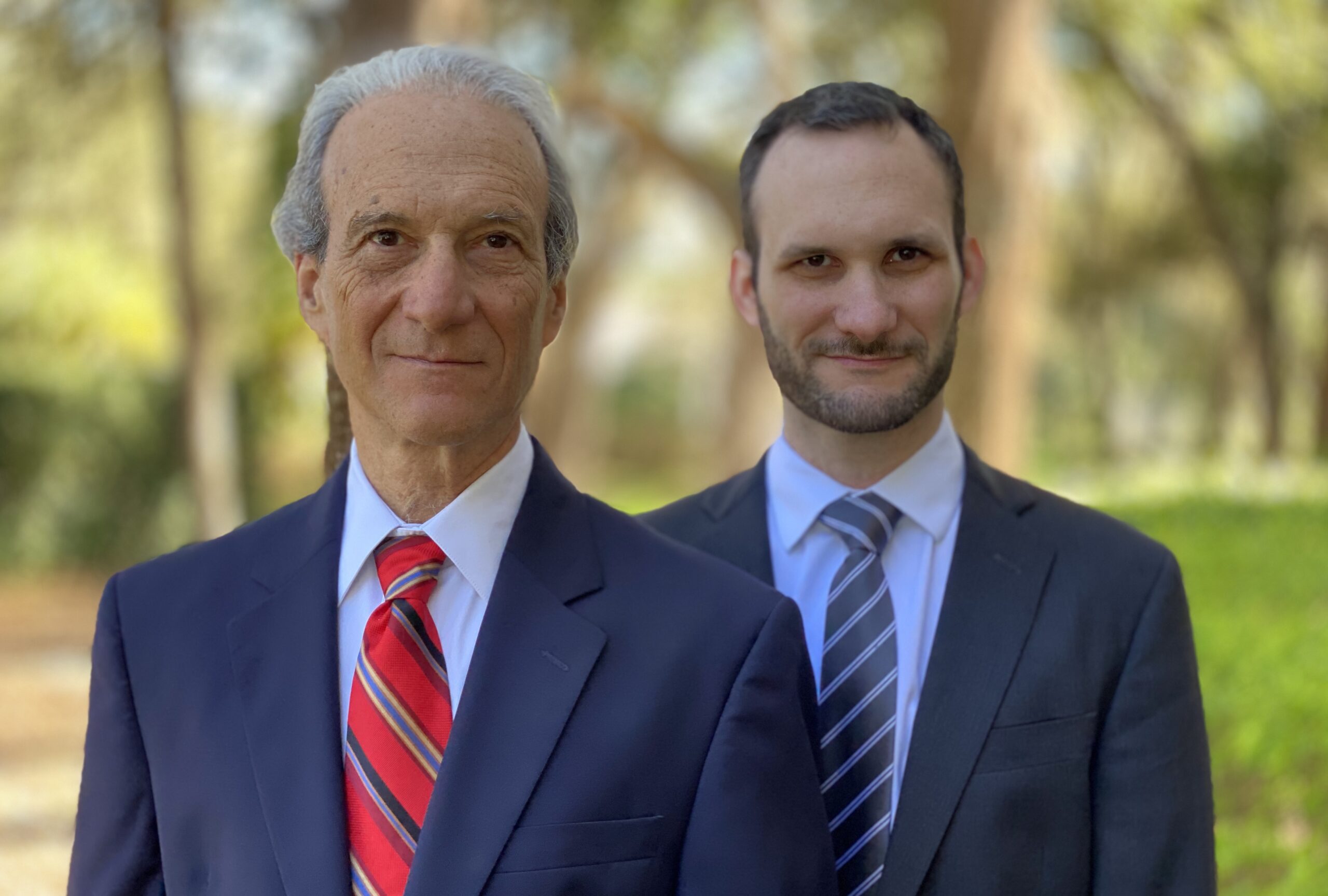
Jon Alper has focused on asset protection planning for more than three decades. His planning was at the heart of BankFirst v. UBS Paine Webber, Inc., the foundational Florida decision on attorney-assisted asset protection planning.

Gideon Alper
Gideon Alper leads the firm’s offshore planning practice. He is a former attorney with the IRS Office of Chief Counsel in the Large Business and International Division.
Alper Law has helped clients nationwide with asset protection planning since 1991. Our role is to evaluate whether a Cook Islands trust fits your situation, explain the tradeoffs, and coordinate the plan if offshore planning makes sense.
What a Cook Islands Trust Attorney Does
A Cook Islands trust attorney drafts the trust agreement, coordinates application and due diligence with a licensed Cook Islands trustee company, and advises on how to fund the trust. We arrange the offshore LLC and bank or brokerage account the trust often holds, plan the funding, and explain the U.S. tax reporting that comes with the trust. Jon Alper and Gideon Alper are members of the Florida Bar, and Gideon Alper is also admitted before the United States Tax Court.
Who Should Consider an Offshore Trust
An offshore trust is best suited for clients with meaningful assets and real creditor exposure. It makes sense when domestic exemptions, insurance, and LLCs no longer cover the risk. Most clients have at least $1 million in total assets or at least $500,000 in liquid assets.
A pending legal claim or existing judgment does not automatically rule out offshore planning.
Common client situations
- Business owners and entrepreneurs
- Physicians and high-liability professionals
- Real estate investors and guarantors
- Families with concentrated assets
- Clients facing serious creditor risk, including existing disputes where planning remains legally available
When a Cook Islands trust is not appropriate
- The cost is disproportionate to the assets protected
- Domestic planning already provides enough protection
- The client wants to conceal assets or avoid legal obligations
- The goal is to reduce tax liability
- The client expects the trust to eliminate all court risk
Questions About Offshore Trust Planning
Can a Cook Islands trust be used after a lawsuit starts?
Yes. Post-claim planning is still possible even after a lawsuit is filed or a judgment is entered. Liquid assets are the strong case; real estate inside the United States is harder to protect after a claim exists, because a U.S. court controls the property directly. A trust set up at that stage includes a Jones clause, which lets the trustee pay the identified creditor on defined terms and gives the settlor a defense if a court demands repatriation.
Is the trust a tax shelter?
No. A Cook Islands trust is designed for creditor protection. U.S. clients must report trust assets and income under applicable U.S. tax and information-reporting rules.
Do I have to give up control of my assets?
The trust is administered by an independent Cook Islands trustee company. When there is no legal threat, you can withdraw money by asking the trustee company, which verifies the request with you before approving it. When creditor pressure arises, the trustee can refuse to distribute assets.
How long does it take to set up?
A Cook Islands trust takes three to four weeks to establish, at which point it is signed and registered. Funding takes longer and varies with the accounts you choose. A Cook Islands bank account adds roughly three to four weeks, and a Swiss account six to eight weeks.
Who acts as the trustee?
The trustee is a Cook Islands trustee company licensed by the Cook Islands Financial Supervisory Commission. We work with several licensed trustees and recommend the one best suited to the client’s situation. We do not receive referral fees, commissions, or compensation from any trustee company.
What annual tax reporting is required?
A U.S. settlor files Form 3520 each year and is responsible for seeing that the trustee files Form 3520-A, the trust’s own return. The settlor also reports foreign financial accounts on the FBAR (FinCEN Form 114) and files Form 8938 when applicable. The client’s CPA prepares these filings, and the trustee signs the 3520-A. The trust does not change federal income tax liability. All income flows through to the settlor’s personal return as a grantor trust.
What happens if a U.S. court orders me to repatriate the assets?
The Cook Islands trustee operates under Cook Islands law and is not bound by U.S. court orders. The trust deed includes a duress clause that activates when the settlor is compelled to demand repatriation, and the trustee disregards instructions given under duress. The settlor must disclose the trust honestly to the U.S. court.
A U.S. court can still hold the settlor in contempt for not producing the assets. A settlor who genuinely cannot compel the trustee can raise that inability as a defense, but must show the court in detail why compliance is impossible, and courts set that burden especially high in asset protection trust cases.
A court may refuse the defense if it finds the settlor created the inability, and that turns on the facts, chiefly when the trust was funded and whether the settlor kept control. Courts have refused it on that ground where the trust was set up or funded once a claim was pending or expected, or after a judgment.